
SPECIFICS OF THE INTERPRETATION OF HOLY SCRIPTURE IN MODERN DISPENSATIONALISM (USING THE EXAMPLE OF THE BOOK OF REVELATION OF JOHN THE THEOLOGIAN)
Evgeny Gennadievich Veselov
Kostroma theological seminary, Kostroma, Russia
Email: ev23@yandex.ru
ORCID: 0000-0001-5141-1879
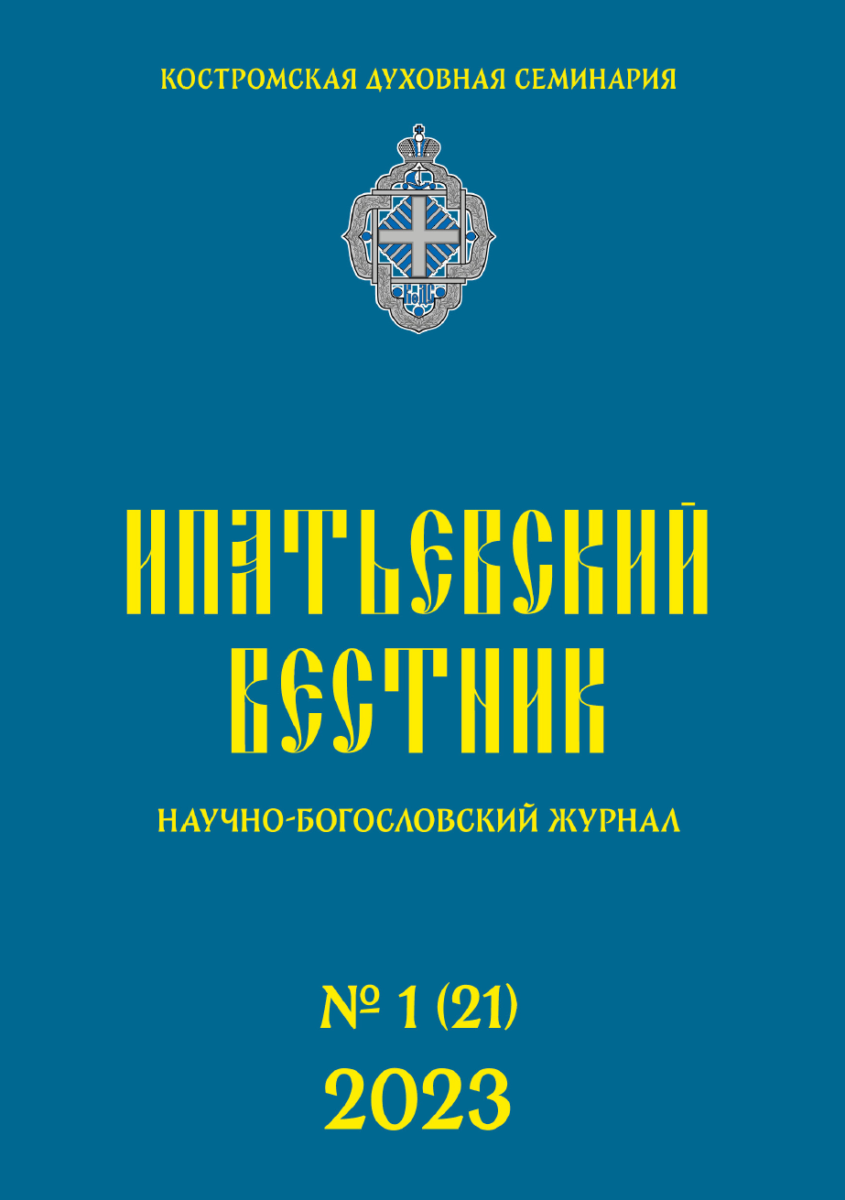
Issue: № 1 (21), 2023
Pages: 11
Annotation
The article analyzes the hermeneutic basis of dispensationalism — the main eschatological doctrine in modern Baptism. Dispensationalism categorically distinguishes between the ways of salvation of Israel and the Church, postulating the doctrines of the invisible "rapture of the church" and the millennial Jewish kingdom, insisting on a strictly literal interpretation of the Old Testament prophecies and blessings for Israel. In fact, dispensationalists use not only a literal, but also an allegorical method, sometimes even with violation of the Scripture. For example, the seven churches of Revelation (chap. 2-3) they mistakenly recognize as seven periods of church history, the city of Babylon (Rev. 17) as a religious system, and for 144 thousand virgins who have not defiled themselves with their wives (Rev. 14), their bodily virginity is denied. On the other hand, sometimes the Lord Himself, angels and elders reveal to John the Theologian, the meaning of some of his visions not literally, but allegorically. Therefore, literal interpretation cannot be the only way of biblical hermeneutics. It should be applied along with other methods in the general context of theology.
Keywords
biblical hermeneutics, exegetics, eschatology, dispensationalism, pretribulationism, premillennialism, the rapture of the church, the apocalypse, the book of Revelation, the millennial kingdom
For citation
Veselov E.G, priest. Specifics of the interpretation of Holy Scripture in modern dispensationalism (using the example of the book of Revelation of John the Theologian) // Ipatievsky vestnik. 2023. № . 1. Р. 11–24 (In Russian). https://doi.org/10.24412/2309– 5164–2023–1–11–24